Expert views · Creatine
What Does Rhonda Patrick Say About Creatine?
Nootrovo · Expert views
Creatine
What Rhonda Patrick says, with sources
Rhonda Patrick takes creatine for both muscle and brain health. She has said she increased her daily dose from 5 grams to 10 grams because studies suggest higher intakes are needed for creatine to reach the brain, and that she sometimes takes more during travel or sleep loss.
The short answer
Creatine beyond the gym
Patrick's FoundMyFitness overview describes creatine as a compound that stores and releases cellular energy, best known as a supplement for physical performance. Her page also covers research on ageing muscle, bone, pregnancy, depression, brain injury and cognition, and notes that hundreds of studies have found creatine monohydrate to be safe. Creatine monohydrate is the form used in most of that research and the one her page discusses. See the FoundMyFitness creatine topic page.
How much comes from food
Her page explains that the body makes some creatine itself and gets the rest from meat and fish. It estimates that an 8-ounce cut of lean beef or a 4-ounce piece of salmon contains roughly 1.5 to 2.5 grams of creatine before cooking, and that cooking converts some of it to creatinine. Fruit and vegetables provide only trace amounts, so vegetarians and vegans tend to start with lower stores. More than 90% of the body's creatine sits in skeletal and heart muscle, with the rest in organs including the brain. Source: FoundMyFitness creatine overview.
Watch: Rhonda Patrick on creatine
Why she moved from 5 g to 10 g
Patrick has described increasing her routine intake from 5 to 10 grams a day as she became more interested in creatine's possible brain effects. Her reasoning is that muscles take up most of a typical 5 gram dose, especially in people who train, and that studies including work from Germany found 10 grams a day raised creatine levels in parts of the brain. Source: How Creatine Dose Relates to Muscle and Brain Energy.
She has said she now supplements with 10 grams a day and has acknowledged that some of what she feels may be a placebo effect.
Ageing muscle and bone
Patrick's creatine page puts weight on older adults. It cites a meta-analysis finding that resistance training combined with creatine improved upper and lower body strength, fat-free mass, muscular endurance and bone mineral density compared with training alone, suggesting creatine may help slow age-related muscle decline. Most of the dosing in that research is in the familiar range for muscle, where her page describes typical use as a loading phase followed by a few grams a day. Source: FoundMyFitness creatine overview.
Her page also covers creatine and mood, noting a hypothesis that depression involves impaired brain energy use, which is why creatine has been tested alongside standard treatment in clinical trials.
Creatine and sleep loss
Patrick often discusses a small crossover study in which 15 healthy young adults were given a single large, weight-based dose of creatine after about 21 hours awake. The dose changed brain energy measures and improved some memory and processing speed tasks compared with placebo. She has said she sometimes takes more than her usual 10 grams when travelling or short of sleep. Her view, which her own page also reflects, is that creatine is most likely to show brain effects when the brain is under stress, such as in sleep deprivation, in older adults or in people who eat little or no meat, since meat and fish are the main dietary sources. Source: What Creatine Does for Muscle and the Brain.
What the wider evidence says
The evidence for cognition is less settled than for muscle. A systematic review of randomised trials in healthy people found possible benefits for short-term memory and reasoning, but results varied and many trials were small (Avgerinos et al., 2018). FoundMyFitness's own summaries say effects on overall cognition and executive function in rested adults are inconsistent, and that the German brain-uptake work did not directly compare 5 grams with 10 grams.
For muscle, 3 to 5 grams a day remains the standard maintenance range in the research Patrick cites. If you have kidney disease or take medicines that affect the kidneys, speak to your doctor first.
My take
Personal opinion
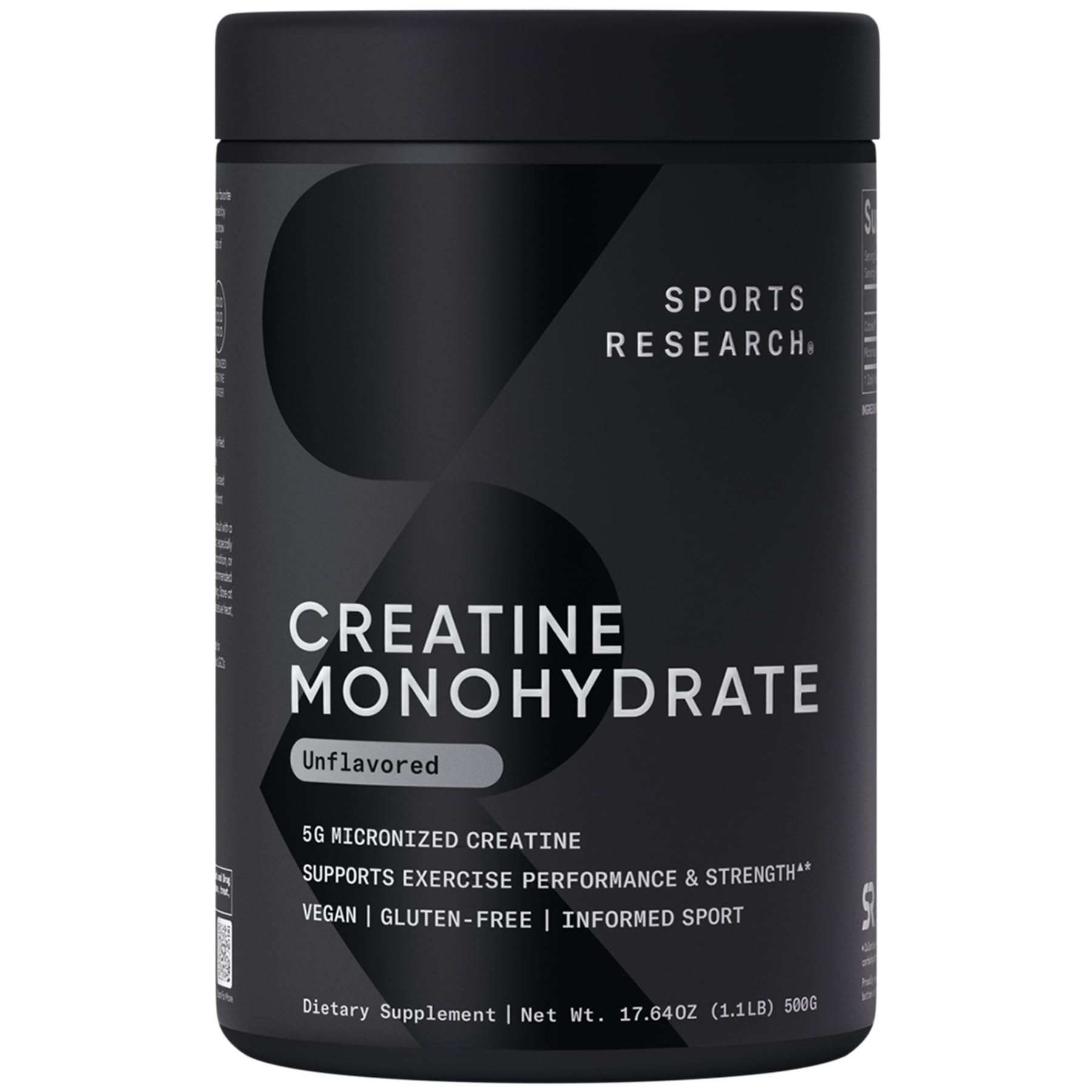
My take: Rhonda Patrick is worth listening to here because the reasoning is laid out and the sources are public. I would still treat any single expert's stack as a starting point, not a rulebook. If I were adding creatine to my own routine, I would start with Sports Research Creatine Monohydrate Powder 5g, Unflavored (100 Servings), keep to the label dose, and give it six to eight weeks before judging it.
If you take prescription medication, check with your pharmacist first. That is the one step I would never skip.
Shop creatine
FAQs
How much creatine does Rhonda Patrick take?
She has said she takes 10 grams a day, up from 5 grams previously, and sometimes more during travel or sleep loss.
Why does she take more than 5 grams?
She argues muscles absorb most of a 5 gram dose and that studies found 10 grams a day raised creatine in parts of the brain.
Is the brain evidence for creatine strong?
It is promising but mixed. Many trials are small, and benefits in well-rested healthy adults are inconsistent.
Sources
This article summarises public statements and is not an endorsement by Rhonda Patrick, who has no connection to Nootrovo. It is not medical advice.