Expert views · L-Theanine
What Does Andrew Huberman Say About L-Theanine?

Nootrovo · Expert views
L-Theanine
What Andrew Huberman says, with sources
Photo: Jamesbrianbounds, CC BY-SA 4.0, via Wikimedia Commons.
Andrew Huberman lists L-theanine as an optional sleep supplement, suggesting 100 to 400 mg taken 30 to 60 minutes before bed. He has said 100 to 200 mg helps him switch off his mind, but warns people who sleepwalk, have night terrors or very intense dreams not to take it.
The short answer
Why Huberman uses theanine
Theanine is an amino acid found naturally in tea leaves, and it is the form usually sold as L-theanine. In his sleep episode Huberman said that 100 to 200 mg of theanine helps him turn off his mind and fall asleep. He also pointed out that theanine is being added to energy drinks to take the edge off the jitters that can come with too much caffeine. Source: Master Your Sleep & Be More Alert When Awake.
The dose in his toolkit
His Toolkit for Sleep newsletter gives a slightly wider range: 100 to 400 mg of theanine taken 30 to 60 minutes before bed. It sits alongside magnesium and apigenin as one of three options, with the advice to try one at a time. He notes that some people like theanine but not magnesium, and vice versa. Source: Toolkit for Sleep.
Watch: Andrew Huberman on l-theanine
His warning about dreams
Huberman attaches a clear caution to theanine. In the episode he said it can make dreams very vivid and that sleepwalkers should be careful with it. The toolkit goes further, advising people not to take theanine if they have overly intense dreams, sleepwalk or have night terrors. Sources: Master Your Sleep episode and Toolkit for Sleep.
Supplements come last
Huberman frames supplements as the last step, not the first. In his sleep episode he said he would start by getting morning light viewing right, then look at nutrition and activity, and only then consider whether a supplement is worth trying. His toolkit newsletter repeats this: start with one supplement, or none, add one at a time, and work out what suits you, because some people need none and some like one but not another. Sources: Master Your Sleep episode and Toolkit for Sleep.
Huberman has disclosed that he uses supplements from Momentous, a podcast partner, and says you can choose any source you trust. Source: Toolkit for Sleep.
The rest of his sleep toolkit
The supplement suggestions sit inside a longer list of habits in Huberman's Toolkit for Sleep. These include viewing sunlight in the morning and again in the late afternoon, waking at roughly the same time each day, avoiding caffeine within 8 to 10 hours of bed, limiting bright overhead light between 10 pm and 4 am, keeping naps under 90 minutes, and keeping the bedroom cool and dark with layers you can throw off. He also says alcohol and most sleep medications disrupt sleep. He suggests non-sleep deep rest or yoga nidra recordings for people who wake in the night and cannot drift off again. For light, he suggests around 10 minutes outside on bright days, 20 minutes when cloudy and 30 to 60 minutes when very overcast, without sunglasses. He also warns that many people feel a natural burst of alertness about an hour before their usual bedtime and says this is normal and will pass. He describes sleep as the foundation of mental and physical health, and says the occasional late night does not matter much as long as the habits hold most of the time. Source: Toolkit for Sleep.
What the wider evidence says
Theanine has some controlled-trial support, though the studies are small. In a four-week randomised, double-blind crossover trial of 30 healthy adults, 200 mg a day of L-theanine reduced scores for depression, trait anxiety and the Pittsburgh Sleep Quality Index compared with placebo, with improvements in sleep latency and sleep disturbance subscores (Hidese et al., 2019). Two of the authors worked for the company that supplied the theanine, which is worth bearing in mind.
Larger and longer trials are still needed. Theanine is generally well tolerated, but if you take medicines for blood pressure, anxiety or sleep, speak to your doctor before adding it.
My take
Personal opinion
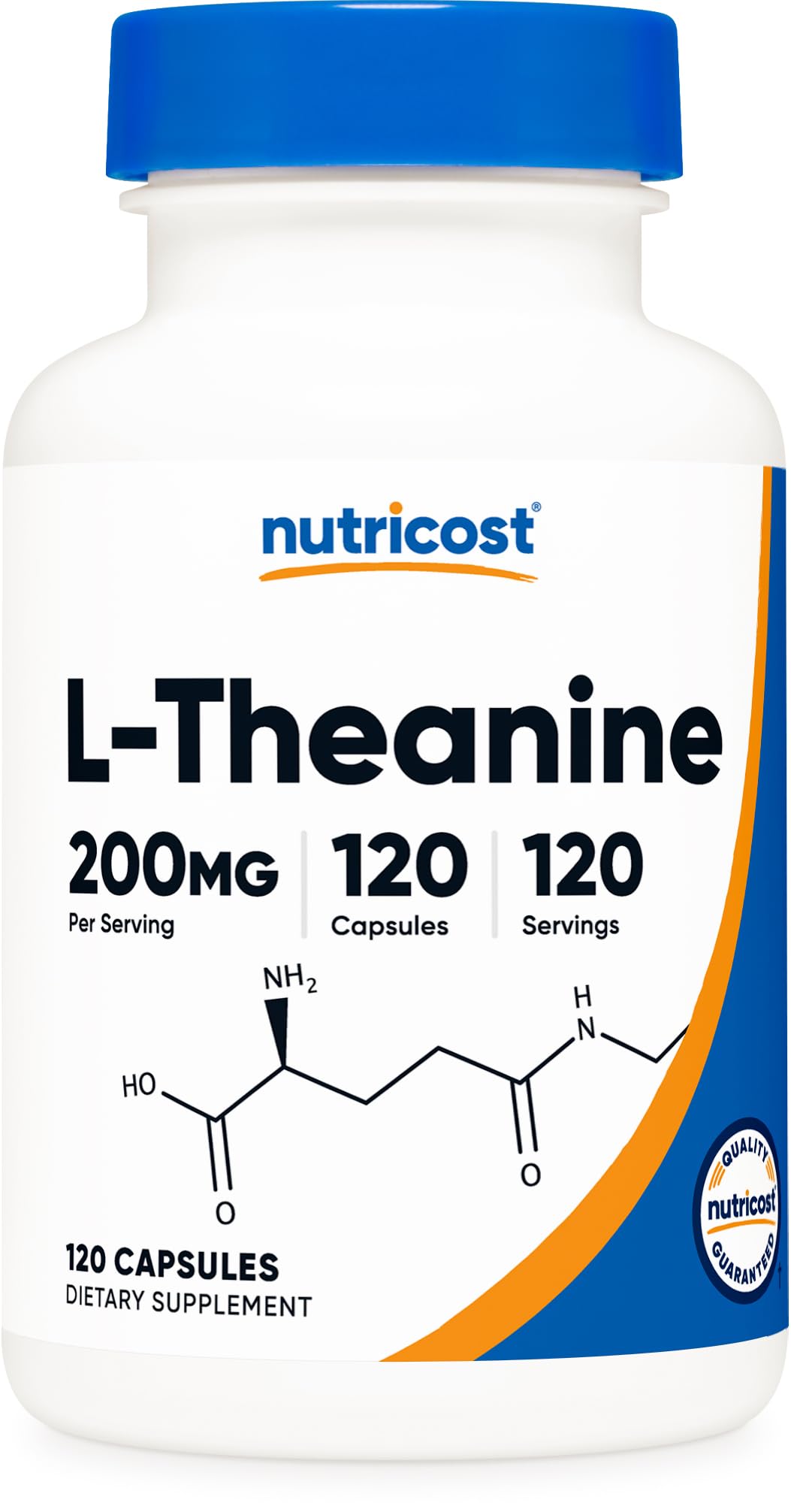
My take: Andrew Huberman is worth listening to here because the reasoning is laid out and the sources are public. I would still treat any single expert's stack as a starting point, not a rulebook. If I were adding l-theanine to my own routine, I would start with Nature's Trove L-Theanine 200mg Super Value Size, keep to the label dose, and give it six to eight weeks before judging it.
If you take prescription medication, check with your pharmacist first. That is the one step I would never skip.
Shop l-theanine


FAQs
How much L-theanine does Andrew Huberman suggest?
His Toolkit for Sleep lists 100 to 400 mg, 30 to 60 minutes before bed. He has said 100 to 200 mg works for him.
Who should avoid theanine according to Huberman?
People who sleepwalk, have night terrors or very intense dreams.
Is there research on theanine and sleep?
A small 2019 trial of 200 mg a day found better sleep quality scores than placebo, but larger studies are needed.
Sources
This article summarises public statements and is not an endorsement by Andrew Huberman, who has no connection to Nootrovo. It is not medical advice.